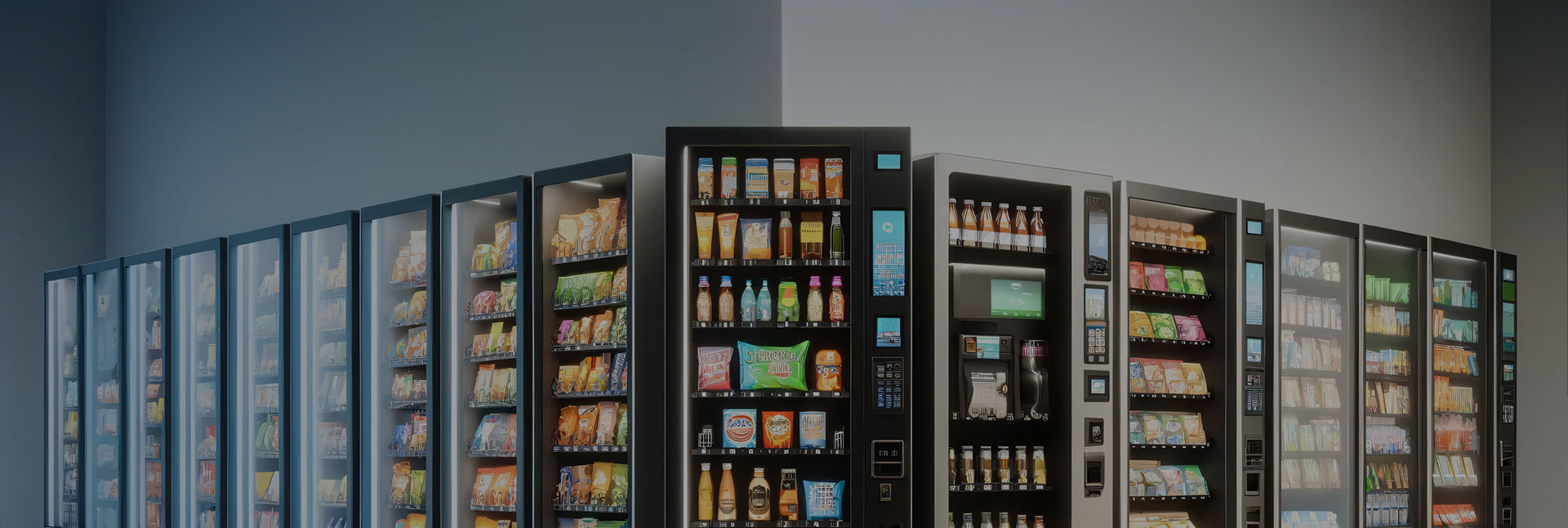
An aluminum cabinet part is any structural or functional component — panel, frame, door, bracket, heat-sink rail, or sub-chassis — machined or formed from aluminum alloy sheet or extrusion for use in electrical enclosures, industrial control cabinets, server racks, and equipment housings. Aluminum's high strength-to-weight ratio (roughly one-third the density of steel at comparable structural performance), excellent thermal conductivity (~160 W·m⁻¹·K⁻¹ for 6061-T6), and inherent corrosion resistance make it the material of choice for modern cabinet design. (Reference: ASM Handbook Vol. 2, Properties and Selection: Nonferrous Alloys and Special-Purpose Materials, ASM International.)
At Zhejiang Jiafeng Electrical & Mechanical Co., Ltd., we manufacture aluminum cabinet parts through an integrated workflow combining sheet metal manufacturing, precision CNC machining, and electromechanical integration — all under one ISO-certified roof in Jiashan, Zhejiang Province, China.
Aluminum Alloy Selection for Cabinet Parts
Alloy selection directly determines formability, weldability, surface quality, and final mechanical performance. The table below references data from Aluminum: Properties and Physical Metallurgy (J.E. Hatch, ed., ASM International, 1984) and ASTM B209 sheet specification.
| Alloy (Temper) |
Tensile Strength (MPa) |
Yield Strength (MPa) |
Elongation (%) |
Density (g/cm³) |
Weldability |
Anodising Suitability |
Typical Cabinet Application |
| 5052-H32 |
228 |
193 |
12 |
2.68 |
Excellent |
Good |
Enclosure panels, door skins, bent brackets |
| 6061-T6 |
310 |
276 |
12 |
2.70 |
Good (filler req.) |
Excellent |
Machined sub-frames, CNC-milled heat-sink rails |
| 6063-T5 |
185 |
145 |
12 |
2.69 |
Good |
Excellent (cosmetic) |
Extrusion profiles, door frames, trim channels |
| 3003-H14 |
152 |
145 |
8 |
2.73 |
Excellent |
Moderate |
Non-structural panels, EMI shielding layers |
| 7075-T6 |
572 |
503 |
11 |
2.81 |
Limited |
Good |
High-stress aerospace/defence cabinet frames |
* Mechanical values are minimum or typical at room temperature per ASTM B209 / ASM Handbook Vol. 2. Actual values depend on sheet thickness, temper, and processing history.
Manufacturing Processes for Aluminum Cabinet Parts
The fabrication route for an aluminum cabinet part is determined by geometry, volume, and tolerance requirements. The following process map is consistent with guidelines in Sheet Metal Forming Fundamentals (Taylan Altan & A. Erman Tekkaya, eds., ASM International, 2012) and our in-house process capabilities.
| Process Stage |
Technology at Jiafeng |
Achievable Tolerance |
Al Thickness Range |
Standard Reference |
Notes for Aluminum |
| Fiber Laser Cutting |
3,000–12,000 W fiber laser |
±0.05 mm (precision) |
0.5–16 mm |
ISO 2768-m |
Nitrogen assist gas prevents oxidation on cut edges |
| CNC Punching (NCT) |
CNC turret press 1500×3000 mm |
±0.10 mm |
0.5–4 mm |
ISO 2768-m |
Soft tooling for louvres, knockouts, lances |
| CNC Press Brake Bending |
35–250 T CNC press brake; Salvagnini auto-bender |
±0.2° bend angle |
0.5–10 mm |
DIN 6935 |
Spring-back compensation programmed per alloy/temper |
| 5-Axis CNC Milling |
5-axis machining center φ2–φ26 |
±0.005 mm |
Solid/plate, all gauges |
ISO 2768-f |
T-slots, pocket milling, contoured surfaces in single setup |
| TIG / Laser Welding |
Robotic TIG; 3,000 W laser welding robot |
±0.20 mm positional |
0.5–10 mm |
AWS D1.2 |
ER4043/ER5356 filler for 5052/6061; pre-clean mandatory |
| CNC Drilling & Tapping |
IDLE-1325 16T drilling/tapping/milling center |
±0.02 mm positional |
All machinable gauges |
ISO 965-1 |
M2.5–M10 threads; HSS or carbide taps per alloy |
| Press Riveting (PEM) |
Press riveting machine M2.5–M10 |
Per PEM standard |
1.0–6 mm |
PEM spec. |
Self-clinching studs/standoffs for PCB mounting in al panels |
Surface Treatment Options for Aluminum Cabinet Parts
The surface condition of an aluminum cabinet part governs corrosion life, electrical conductivity at grounding points, paint adhesion, and aesthetics. Treatment selection follows guidance in MIL-A-8625F (anodising), ISO 9227 (salt-spray testing), and Jiafeng's in-house ceramic conversion line qualification data.
| Treatment |
In-House? |
Layer Thickness (µm) |
Salt-Spray (ISO 9227) |
Hardness (HV) |
Colour Options |
Best For |
| Anodising Type II |
Partner network |
5–25 |
200–500 h |
~300 |
Clear, black, gold, custom dye |
Decorative panels, electronics housings |
| Hard Anodising Type III |
Partner network |
25–80 |
336+ h |
400–600 |
Natural grey, black |
Wear surfaces, aerospace, defence |
| Powder Coating |
✔ In-house dual line |
60–120 |
500–1,000 h (post-phosphate) |
~80 (Shore D) |
Any RAL; matt/gloss/textured |
Industrial cabinets, outdoor enclosures |
| Ceramic Conversion (chrome-free) |
✔ In-house 7-slot line |
0.5–2 (nano) |
300–600 h |
Substrate |
Clear / slight iridescent |
Paint adhesion primer, RoHS-compliant base |
| Alodine (Chromate, MIL-DTL-5541) |
Partner network |
0.03–0.8 |
168 h (Class 1A) |
Substrate |
Gold, clear |
Military, avionics, RF grounding |
| Brushing + Clear Lacquer |
✔ In-house polishing line |
5–15 (lacquer) |
Cosmetic only |
— |
Hairline, satin |
Consumer-facing panels, front doors |
Dimensional Tolerances for Aluminum Cabinet Parts
Tolerance selection for an aluminum cabinet part must balance functional fit, assembly interchangeability, and manufacturing cost. The tolerances below follow ISO 2768 (general tolerances for linear and angular dimensions), DIN 6935 (cold bending of flat-rolled steel and aluminium), and ISO 10360-2 (CMM performance verification).
| Feature |
Standard (ISO 2768-m) |
Precision (ISO 2768-f) |
Jiafeng Achievable |
Verification Method |
| Laser-cut linear dimension |
±0.20 mm |
±0.10 mm |
±0.05 mm |
CCD vision ±50 µm; CMM |
| Punched hole diameter |
±0.15 mm |
±0.05 mm |
±0.05 mm |
CCD vision |
| Bend angle |
±0.5° |
±0.3° |
±0.2° |
Digital angle gauge |
| Bend flange length |
±0.30 mm |
±0.15 mm |
±0.10 mm |
CMM |
| 5-axis machined feature |
±0.05 mm |
±0.02 mm |
±0.005 mm |
CMM E=(1.9+3L/1000) µm |
| Thread (tapped) |
6H class |
5H class |
5H class |
Go/No-Go gauge; ISO 965-1 |
| Flatness (per 300 mm) |
0.50 mm |
0.30 mm |
0.20 mm |
CMM; surface plate |
Aluminum vs. Steel Cabinet Parts — Comparative Analysis
Choosing between aluminum and steel for a cabinet part involves trade-offs across weight, cost, corrosion behaviour, and machinability. The following comparison is consistent with data published in Materials Selection in Mechanical Design (M.F. Ashby, 5th ed., Butterworth-Heinemann, 2017).
| Property |
Aluminum 6061-T6 |
Cold-Rolled Steel (SPCC) |
Stainless Steel 304 |
Decision Guidance |
| Density (g/cm³) |
2.70 |
7.85 |
8.00 |
Al is ~66% lighter — choose Al for portable/handheld equipment |
| Thermal Conductivity (W·m⁻¹·K⁻¹) |
167 |
50 |
16 |
Al dissipates heat ~10× better than SS — ideal for power electronics cabinets |
| Corrosion Resistance (bare) |
Excellent (native oxide) |
Poor (must coat) |
Excellent (Cr₂O₃ layer) |
Al requires no coating indoors; outdoor Al needs anodising or powder coat |
| Machinability (relative) |
Excellent |
Good |
Moderate |
Al cuts 3–5× faster than SS — lower machining cost for complex parts |
| Relative Material Cost (sheet) |
Medium |
Low |
High |
Steel wins on raw material cost; Al often wins on total lifecycle cost |
| EMI/RFI Shielding Effectiveness |
Very Good |
Good (needs coating) |
Good |
Al enclosures with gaskets achieve >80 dB attenuation (per IEEE Std 299) |
Industry Applications of Aluminum Cabinet Parts
| Industry |
Typical Aluminum Cabinet Part |
Key Requirement |
Preferred Alloy |
Jiafeng Process Path |
| Power & Energy |
Inverter housing, busbar enclosure, battery module frame |
IP54+, thermal management, CE/UL |
6061-T6 |
Laser cut → bend → TIG weld → powder coat |
| Telecom & Networking |
19-inch rack chassis, antenna mount bracket, base-station panel |
EMI shielding, light weight, hole accuracy |
5052-H32 / 6063-T5 |
NCT punch → bend → anodise |
| Industrial Automation |
PLC cabinet panel, servo drive enclosure door, robot cell guard |
Fast delivery, structural rigidity |
5052-H32 |
Salvagnini auto-bend → powder coat |
| Medical Devices |
Diagnostic imaging shell, infusion pump cover, instrument tray |
Ultra-clean, ISO 13485, biocompatibility |
6061-T6 |
5-axis machine → hard anodise → CMM verify |
| Semiconductor Equipment |
Cleanroom panel, wafer-handler frame, vacuum chamber cover |
Ultra-flat, particle-free, passivated |
6061-T6 |
5-axis + CNC mill → hard anodise |
| Smart Retail & Vending |
Vending machine outer panel, kiosk door, product tray structure |
Cosmetic finish, corrosion, lightweight |
5052-H32 / 6063 |
Punch → bend → powder coat → silk-screen |
| New Energy & EV |
EV charging station housing, solar inverter enclosure, battery pack frame |
IP65+, outdoor weathering, thermal |
6061-T6 / 5052 |
Laser cut → TIG weld → ceramic conversion + powder coat |
Why Source Your Aluminum Cabinet Part from Jiafeng?
From a single flat-cut blank to a fully assembled, painted, and tested aluminum cabinet part, Jiafeng delivers end-to-end production inside one ISO-certified factory. Our integrated capability eliminates inter-supplier handoffs, compresses lead times to 7–15 business days for standard parts, and provides a single point of accountability for quality.
-
Full process chain in-house: sheet metal, precision machining, electromechanical assembly
-
Fiber laser power: 3,000–12,000 W — cuts Al up to 16 mm clean
-
5-axis CNC machining: ±0.005 mm for complex contoured aluminum parts
-
In-house ceramic conversion & powder coating — no outsourcing delays
-
100% outgoing inspection: CMM + CCD vision + X-ray element analysis
-
OEM/ODM support: DFM review, prototyping, and volume ramp from one partner
Frequently Asked Questions — Aluminum Cabinet Parts
What is an aluminum cabinet part?
An aluminum cabinet part is any component — panel, frame, door, bracket, rail, or sub-chassis — formed or machined from aluminum alloy for use in an electrical enclosure, industrial control cabinet, server rack, or equipment housing. Common alloys include 5052, 6061, and 6063, selected for their combination of formability, strength, corrosion resistance, and anodising suitability.
Which aluminum alloy is best for cabinet parts?
For sheet metal bent panels and welded enclosures, 5052-H32 is preferred for its excellent weldability and formability. For machined structural components requiring higher strength, 6061-T6 (310 MPa tensile) is the industry standard. For decorative extruded profiles and door frames, 6063-T5 provides the best anodised surface finish.
What tolerances can Jiafeng hold on aluminum cabinet parts?
Laser-cut aluminum features are held to ±0.05 mm (precision tier, ISO 2768-f). CNC-bent flanges achieve ±0.10 mm length and ±0.2° angle (DIN 6935). For fully machined aluminum cabinet parts processed on our 5-axis centres, positional tolerance reaches ±0.005 mm, verified by CMM with E = (1.9 + 3L/1,000) µm accuracy (ISO 10360-2).
How are aluminum cabinet parts surface treated?
The most common treatments are anodising (Type II for aesthetics; Type III hard-coat for wear resistance), powder coating (any RAL colour, 500–1,000 h salt-spray after phosphate pre-treatment), and chrome-free ceramic conversion coating (RoHS-compliant, used as a paint adhesion primer or standalone corrosion protection for 300–600 h). Jiafeng performs powder coating and ceramic conversion in-house; anodising is handled through a qualified partner network.
Can Jiafeng supply aluminum cabinet parts with full electromechanical assembly?
Yes. Beyond fabricating the aluminum cabinet part itself, Jiafeng's electromechanical integration team can populate it with wiring harnesses, PCBs, sensors, PLCs, and HMI panels to deliver a fully tested, ready-to-deploy system. This vertically integrated approach eliminates the need for a separate assembly contractor and reduces total project lead time.