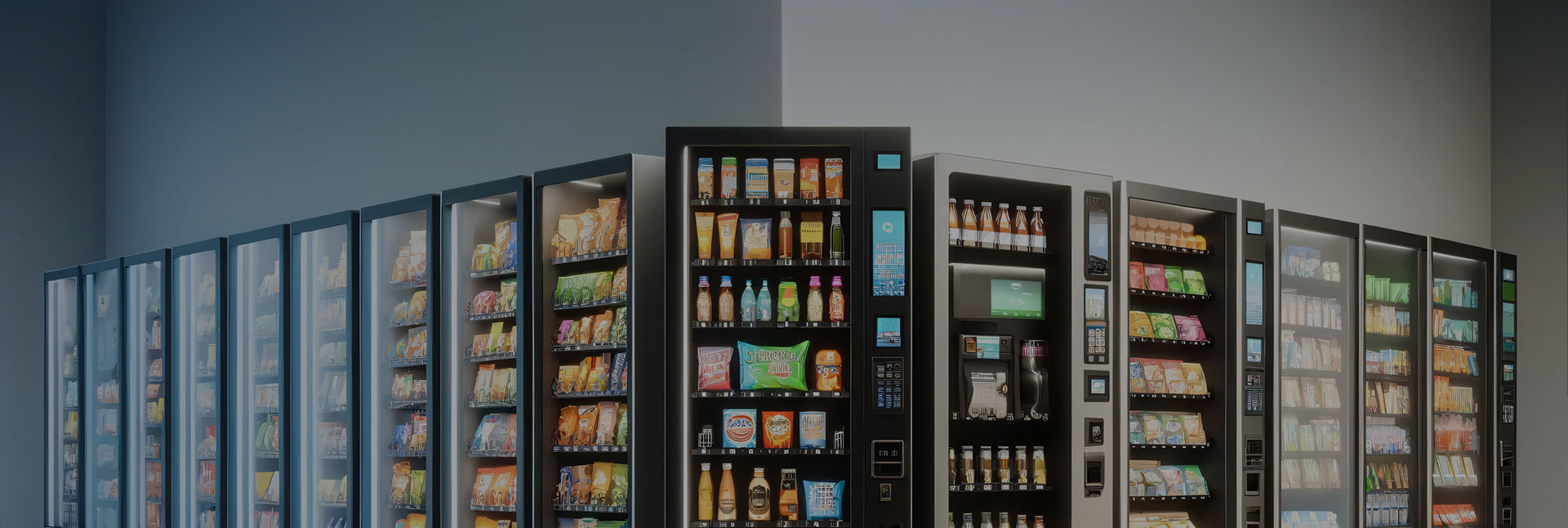
ATM sheet metal refers to the fabricated metal components that form the structural skeleton and outer enclosure of an Automated Teller Machine. According to ISO 9564-1:2017 (Financial services — Personal Identification Number management and security) and the EN 1332-1:2009 ergonomics standards for man–machine interfaces on financial equipment, ATM enclosures must satisfy tight dimensional tolerances, corrosion-resistance specifications, and mechanical rigidity requirements simultaneously.
Structurally, a modern through-the-wall (TTW) or freestanding ATM enclosure is assembled from multiple sheet metal sub-assemblies — each produced by a sequence of laser cutting, CNC bending, robotic welding, and powder coating operations. The complexity of these assemblies, combined with the security demands of cash-handling equipment, makes ATM sheet metal one of the most technically demanding segments in financial equipment manufacturing.
| Sub-Assembly | Function | Key Sheet Metal Processes | Typical Material |
|---|---|---|---|
| Outer Fascia & Topper Housing | Brand surface, screen surround, branding graphics | Laser cutting, CNC bending, pad printing, powder coat | SGCC / SPCC 1.0–1.5 mm |
| Upper Chassis Frame | Mounting for card reader, receipt printer, display | NCT punching, CNC bending, PEM riveting, zinc plating | SPCC 1.5–2.0 mm |
| Safe / Lower Module Door | Anti-tamper cash compartment door with locking bolts | Laser cutting, heavy-gauge bending, robotic MIG weld | Cold-rolled steel 3–6 mm |
| Cash Cassette Guides & Rails | Precision guide tracks for cash cassette alignment | Laser cutting, CNC drilling, passivation | 304 stainless / SECC 1.0–2.0 mm |
| Interior Bracket & Mount Plate | PCB mounting, PSU cradle, wiring harness brackets | Stamping / punching, PEM riveting, zinc plating | SECC / SPCC 1.0–1.6 mm |
| Base / Plinth Plate | Floor anchoring, levelling, anti-tilt base structure | Heavy laser cutting, CO₂ weld, powder coat | Hot-rolled steel 4–10 mm |
Table 1 – Typical ATM enclosure sub-assemblies and corresponding sheet metal processes. Material grades per ASTM A1008 / JIS G3141 / EN 10130.
ATM enclosures are subject to a layered set of international standards governing structural integrity, electromagnetic compatibility, corrosion resistance, and accessibility. Jiafeng's sheet metal manufacturing processes are designed to satisfy all of the following.
| Standard / Reference | Scope | Relevance to ATM Sheet Metal |
|---|---|---|
| ISO 9227:2022 | Corrosion tests — neutral salt-spray (NSS) | Minimum 500 h NSS for powder-coated outdoor ATMs; our zinc + powder coat achieves 96–1000 h |
| EN 1332-1:2009 | Ergonomics of man–machine interfaces for financial equipment | Defines card-slot height, keypad reach zones, fascia geometry — all driven by sheet metal forming |
| IEC 60529 | Ingress protection (IP) rating | Outdoor ATMs typically require IP54 or IP65; achieved through gasketed, tight-tolerance sheet metal joints |
| ISO 2768-m / -f | General tolerances for linear and angular dimensions | Governs dimension and flatness tolerances for all sheet metal formed parts; Jiafeng holds ±0.05 mm precision tier |
| DIN 6935 | Cold bending of flat steel products | Specifies minimum bend radii and springback allowances for steel; followed in our CNC press-brake programming |
| UL 291 / EN 1143-1 | Safes and secure cabinets | ATM lower safe module must resist drill and torch attack; dictates heavy-gauge steel and weld-seam continuity |
| RoHS Directive 2011/65/EU | Restriction of hazardous substances in electronic equipment | All surface treatments verified by our in-house X-ray / RoHS element analyser before shipment |
| ISO 10360-2 | CMM performance verification | Our high-precision CMM (E = 1.9 + 3L/1000 µm) used for 100% final inspection of critical ATM dimensions |
Table 2 – Key international standards applicable to ATM sheet metal enclosure manufacturing. See also Jiafeng certifications page.
Producing a compliant ATM enclosure demands tighter process control than a typical industrial cabinet. Below is Jiafeng's standard workflow, enriched with the engineering rationale for each step. All downstream operations — including precision machining of internal mechanisms and electromechanical integration of card readers, receipt printers, and cash-recycler modules — can be completed in the same factory.
Our R&D team reviews customer STEP/DXF drawings for sheet metal Design-for-Manufacture (DFM). Bend radii, minimum hole-to-edge distances, and relief cuts are optimised before nesting software calculates the most material-efficient cutting layout — typically achieving >80% material utilisation on ATM fascia blanks.
3,000–12,000 W fiber lasers cut fascia profiles, card-slot apertures, display cutouts, and keypad openings in a single operation. Kerf width is held to ≤0.3 mm; positional accuracy ±0.05 mm (ISO 2768-f). No burr-removal step is needed for cut edges <6 mm thick, reducing cycle time.
CNC punch presses form ventilation louvres, cable knockouts, and lance-and-form features with repeatable precision. PEM self-clinching nuts (M4–M8) are installed by press riveter, providing the threaded inserts that all internal ATM modules bolt into.
Salvagnini automatic bending cells fold complex ATM box geometries in a single setup — eliminating repositioning errors. Bend angle tolerance: ±0.2° (precision tier, DIN 6935). Our 35T–250T CNC press brakes handle heavier safe-door frames. A springback-compensation algorithm in the CNC controller ensures first-article accuracy without manual adjustment.
Laser welding robots (3,000 W) join thin-gauge fascia corners with minimal heat distortion. CO₂ welding robots (bed: 1,800×2,300 mm) complete structural joints on heavier ATM cabinet frames. Weld-seam polishing machines blend cosmetic joints to a hairline finish required for ATM facades visible to end-users.
Outer panels receive a 21-slot immersion phosphating pre-treatment followed by electrostatic powder coating (any RAL colour, gloss 60–70° GU typical for ATM fascias). Safe-door panels are zinc electroplated (96–128 h NSS) beneath the top coat. All coatings verified to pass ≥500 h NSS per ISO 9227.
Silk-screen and pad printing apply bank logos, regulatory warning labels, and tactile branding elements to coated surfaces using UV-cure inks. Our 50 W fibre laser engraves permanent serial numbers, QR codes, and asset-tracking marks without ink or consumables.
Every ATM sheet metal assembly is measured on our high-precision CMM (E = 1.9 + 3L/1,000 µm, ISO 10360-2) and cross-checked by CCD planar vision (±50 µm). Critical fascia apertures for card slots and keypads are verified against EN 1332-1 dimensional requirements before packaging. Full inspection report accompanies each shipment.
Material selection for ATM sheet metal is governed by a combination of security requirements, corrosion environment, surface-finish compatibility, and cost. The following table summarises Jiafeng's standard material recommendations, based on industry practice aligned with ASTM A1008/A1008M (cold-rolled steel), ASTM B209 (aluminium alloy sheet), and ASTM A167 (stainless steel sheet).
| ATM Component | Recommended Material | Grade / Standard | Thickness | Rationale |
|---|---|---|---|---|
| Outer Fascia Panels | Cold-rolled steel (CRS) or galvanised (EG) | SPCC / DX51D (JIS G3141 / EN 10346) | 1.0–1.5 mm | Excellent paint adhesion; cost-effective; smooth surface for branding |
| Internal Chassis / Frame | Electrolytic zinc-plated (SECC) | SECC (JIS G3313) | 1.5–2.0 mm | Self-corrosion protection inside cabinet; ESD-friendly; no secondary coating needed |
| Safe / Lower Safe Module | Cold-rolled steel, heavy gauge | DC04 / SPCE (EN 10130 / JIS G3141) | 3–6 mm | UL 291 / EN 1143-1 drill & torch resistance; high tensile strength |
| Cash Cassette Rails | Austenitic stainless steel | SUS304 / ASTM A240 Tp304 | 1.0–1.5 mm | Corrosion immunity in high-humidity ATM vaults; low friction for cassette sliding |
| Outdoor ATM Topper / Surround | Aluminium alloy | AA5052-H32 (ASTM B209) | 1.5–2.5 mm | Lightweight; inherently corrosion resistant; anodising gives premium appearance |
| Base / Anchor Plate | Hot-rolled steel (HRS) | SPHC / S235JR (JIS G3131 / EN 10025) | 6–10 mm | High rigidity for anchor bolts; anti-tilt structural base; lower cost than CRS at thick gauges |
Table 3 – Material recommendations for ATM sheet metal components. Grades per JIS, EN, and ASTM standards. Contact our OEM/ODM team for custom alloy requirements.
ATM assembly requires tighter tolerances than general sheet metal enclosures because card-slot apertures, keypad alignment, and fascia joints must pass EN 1332-1 ergonomic checks and OEM fit-and-function validation. The following table compares Jiafeng's achievable tolerances against the applicable international standards.
| Feature | ISO 2768-m (Std) | Jiafeng Standard | Jiafeng Precision | ATM Relevance |
|---|---|---|---|---|
| Laser-cut linear (≤30 mm) | ±0.20 mm | ±0.15 mm | ±0.05 mm | Card slot width (ISO 7816-1 requires 85.6 ± 0.13 mm card width) |
| Hole diameter (punched) | ±0.20 mm | ±0.10 mm | ±0.05 mm | PEM nut hole (interference-fit, must be held ±0.05 mm) |
| Bend angle | ±1.0° | ±0.5° | ±0.2° | Fascia return flange; gasket groove alignment |
| Flange length (bend-to-edge) | ±0.50 mm | ±0.30 mm | ±0.10 mm | Panel-to-frame mating; hinge alignment |
| Flatness (per 300 mm) | 1.0 mm | 0.5 mm | 0.2 mm | Display screen back-plate; sealing surface planarity |
| CMM final inspection | — | E=(2.9+4L/1000) µm | E=(1.9+3L/1000) µm | ISO 10360-2 certified CMM — full inspection report per shipment |
Table 4 – Tolerance comparison for ATM sheet metal. ISO 2768-m reference values. Jiafeng's precision tier is available on request for critical features. See also our precision machining page for sub-0.01 mm machined features.
ATM OEMs require a supplier that can combine security-grade structural fabrication with cosmetic exterior finishing under one roof. Jiafeng's vertically integrated factory delivers that combination across all ATM form factors — through-the-wall, freestanding, and lobby kiosk.
| Requirement | Jiafeng Capability | Competitor Gap (typical) |
|---|---|---|
| Full enclosure in one factory | Raw material → finished assembly, all in-house | Multiple suppliers → handoff delays, quality gaps |
| Security-grade safe door | Heavy-gauge (3–6 mm) laser cut + CO₂ robotic weld | Often outsourced; no welding robot for thick-gauge |
| Cosmetic fascia with branding | Powder coat + silk-screen + pad print + laser mark, all in-house | Printing outsourced; colour matching inconsistent |
| EN 1332-1 aperture accuracy | ±0.05 mm laser cut; CMM 100% verified | ±0.20 mm standard; spot-check only |
| Corrosion performance | 96–128 h zinc plate + 500–1000 h powder coat (ISO 9227) | Powder coat only; no zinc base; <500 h NSS typical |
| Electromechanical assembly | Mechatronics integration available in-house | Sheet metal only; OEM must source assembly separately |
Table 5 – Jiafeng ATM sheet metal advantages vs. typical single-process suppliers.
ATM lower safe module doors are typically fabricated from cold-rolled steel at 3–6 mm thickness, sometimes with a sandwich construction combining outer steel skins and a harder inner plate. Requirements are governed by UL 291 (Automated Teller Machine (ATM) Standards) in North America and EN 1143-1 in Europe, which specify minimum resistance to drill-and-pry attack. Jiafeng's robotic CO₂ welding equipment processes steel up to 20 mm for heavy-duty ATM safe structures.
For outdoor ATMs, the recommended system is: (1) zinc electroplating base (blue-white, 96–128 h NSS per ISO 9227) followed by (2) immersion phosphating pre-treatment and (3) powder coating (minimum 500 h NSS after phosphating). This duplex system outperforms single-coat powder paint by a factor of 3–5× in corrosion resistance at seams and cut edges. Jiafeng performs all three steps in-house, including a 7-slot ceramic conversion treatment line for aluminium topper panels.
Yes. EN 1332-1:2009 specifies precise reach zones, card-slot heights (680–1,100 mm from floor), and key-spacing dimensions for ATM man–machine interfaces. Jiafeng programs these dimensions directly into laser-cutting and CNC-bending routines. Critical aperture dimensions are verified by 100% CMM inspection, with results included in the shipment quality report.
Both. Jiafeng can supply bare sheet metal fabrications (cut-bend-weld-coat), or complete ATM cabinet assemblies including hinge installation, lock hardware, gasket fitting, and screen surround assembly. Through our electromechanical integration capability, we can also pre-install card reader brackets, receipt printer cradles, and wiring harness guides — delivering a semi-finished upper module ready for final electronics installation.
For new ATM sheet metal projects, the typical timeline is: DFM review 2–3 days → first-article sample 7–10 days → production 15–25 days depending on quantity. Repeat orders with approved drawings are fulfilled in 10–18 business days. All production, surface treatment, printing, and quality inspection is performed in-house, eliminating third-party scheduling delays. Contact us with your drawing and quantity for a precise timeline commitment.
Send us your drawings or describe your ATM enclosure requirements. Our engineering team will respond with a DFM review and quotation within 24 hours.



