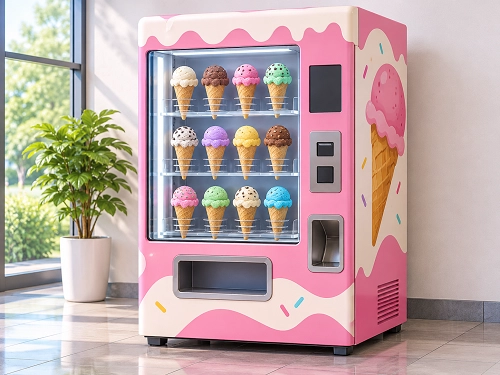
The vending machine industry is entering a new stage of development as automated retail technology creates more opportunities for convenient food and beverage services. Among the emerging equipment categories, the Ice Cream Vending Machine is attracting attention from retailers, business operators, and investors looking to expand self-service dessert options.
Unlike traditional ice cream shops that require staff to take orders and prepare products, modern ice cream vending machines allow customers to purchase frozen desserts through an automated process. With improvements in refrigeration, intelligent control systems, and cashless payment technology, these machines are becoming an attractive option for businesses in high-traffic locations.
Convenience has become an important factor in the food retail industry. Consumers increasingly expect quick access to snacks and desserts in places such as shopping malls, transportation hubs, entertainment centers, office buildings, and tourist attractions.
Ice cream is particularly suitable for automated retail because it is a familiar product with broad consumer appeal. An ice cream vending machine can provide convenient access to frozen treats without requiring a traditional staffed service counter.
The development of automated frozen dessert kiosks also demonstrates how vending equipment is expanding beyond conventional snacks and beverages. Industry reports and recent business developments indicate growing interest in self-service frozen dessert solutions, including soft serve, frozen yogurt, and other specialty desserts.
Technology is playing an increasingly important role in modern vending equipment. Today's ice cream vending machines can incorporate several features designed to improve operational efficiency and customer experience.
1. Intelligent Temperature Control
Stable refrigeration is essential for maintaining the quality and consistency of frozen desserts. Temperature monitoring and intelligent control systems help operators manage internal conditions and identify potential refrigeration problems.
2. Automated Dispensing Systems
Automated dispensing technology allows machines to deliver ice cream with reduced manual involvement. Depending on the machine design, customers may select different flavors, serving sizes, or product options through an interactive interface.
3. Cashless Payment Options
Modern vending equipment increasingly supports convenient payment methods, including bank cards, contactless payments, and mobile payment systems. These options help simplify transactions and improve accessibility for customers.
4. Remote Monitoring and Management
Connected vending machines can support remote monitoring of operating conditions, sales information, and equipment status. This allows operators to manage multiple machines more efficiently and arrange maintenance when necessary.
One of the main advantages of an ice cream vending machine is its flexibility in commercial applications. Businesses can consider different installation environments according to customer traffic, available space, electricity supply, and operating requirements.
Common application locations include:
Shopping Malls: Provide convenient dessert options for shoppers and families.
Amusement Parks: Serve visitors looking for refreshments during entertainment activities.
Tourist Attractions: Offer accessible frozen desserts in busy visitor areas.
Schools and Universities: Provide self-service dessert options where permitted by local regulations.
Office Buildings: Offer convenient refreshments for employees and visitors.
Transportation Hubs: Serve travelers who want quick snacks while waiting.
Choosing the right installation location is an important factor in determining the commercial performance of vending equipment. Operators should evaluate foot traffic, target customers, product demand, and daily operating conditions before installation.
For businesses planning to invest in automated dessert retail, selecting suitable equipment requires more than comparing machine prices. Several technical and operational factors should be considered.
Refrigeration Performance: The machine should maintain appropriate freezing conditions to protect product quality during continuous operation.
Dispensing Efficiency: A reliable dispensing system can help reduce waiting times and provide consistent serving results.
Machine Capacity: Storage capacity should match expected customer demand and the frequency of product replenishment.
Ease of Cleaning and Maintenance: Food-contact components and internal structures should be designed for convenient cleaning and routine maintenance.
Payment Compatibility: Payment systems should support the methods commonly used in the target market.
After-Sales Support: Technical assistance, spare parts availability, and maintenance services are important considerations for long-term operation.
Businesses should also confirm food safety requirements, electrical specifications, and local vending regulations before deploying equipment.
The development of ice cream vending machines reflects a broader transformation in the global unattended retail industry. Automation, digital payments, connected equipment, and flexible retail formats are creating new opportunities for frozen dessert businesses.
For equipment manufacturers, future development may focus on improving refrigeration efficiency, enhancing dispensing accuracy, simplifying cleaning procedures, and integrating more intelligent management systems.
Customization is another important consideration. Different operators may require different machine capacities, appearance designs, dispensing configurations, and payment solutions depending on their business models and target markets.
As automated retail continues to evolve, the Ice Cream Vending Machine is expected to remain an interesting equipment category for businesses exploring new ways to deliver convenient frozen desserts.
For retailers, distributors, and entrepreneurs, understanding equipment performance, installation requirements, and customer demand will be essential when evaluating opportunities in this growing segment.