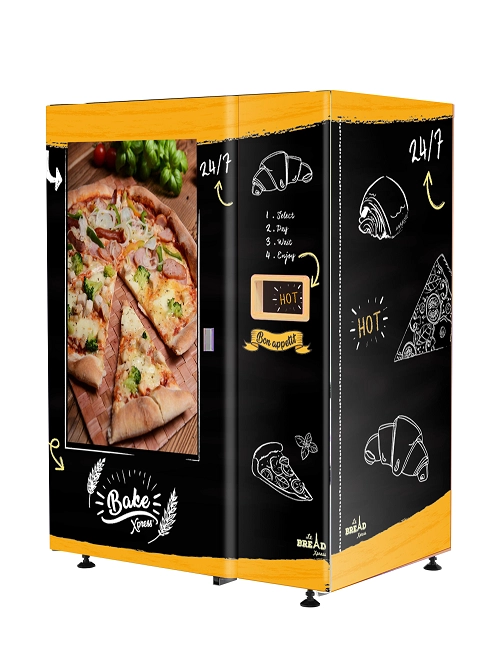
Microwave-heated meal vending machines are changing how we think about convenient food. Unlike traditional vending machines that dispense cold snacks or pre-packaged items, these modern systems deliver freshly heated meals in minutes. They’re popping up in workplaces, transit hubs, schools, hospitals, and public spaces where people need a quick, satisfying meal without a long wait.
What Is a Microwave-Heated Meal Vending Machine?
At its core, a microwave-heated meal vending machine combines:
- Automated vending (dispensing food items on demand),
- Food storage and organization, and
- Integrated heating (microwave) systems that warm food just before delivery.
Instead of selling only packaged snacks, these machines can offer complete meals — from sandwiches and burritos to pastas and rice bowls — that are automatically heated at the time of purchase.
How It Works: The Step-by-Step Process
A typical user interaction with a microwave-heated meal vending machine goes like this:
Selection
The user chooses a meal from a digital touchscreen menu interface.
Payment & Authorization
The machine accepts payment (credit/debit, mobile wallet, contactless card, or employee badge, depending on installation).
Meal Retrieval & Positioning
A mechanism inside the machine selects the chosen meal and moves it to the heating chamber.
Heating Cycle
The machine activates its built-in microwave to heat the meal.
Delivery
Once ready, the heated meal is delivered to a user access tray.
Behind this simple process lies a complex engineering system integrating precise automation with safe and effective heating.
Technical Architecture and Key Components
Food Storage System
Meals are typically stored in refrigerated or temperature-controlled compartments to remain fresh.
There are two common configurations:
- Carousel/Rotary Racks: A rotating set of trays holds meals and rotates them to a pickup point.
- Linear Rails & Robotic Pickers: A robotic arm or shuttle retrieves meals from shelves and transports them to the heating chamber.
Temperature sensors and control circuits keep the storage compartment within a safe range (typically 32°F–41°F / 0°C–5°C) for perishable meals.
Microwaves and Heating Module
The core innovation of these machines is the built-in microwave amplifier and cavity.
The microwave system includes:
- Magnetron: Generates microwave radiation at ~2.45 GHz — the standard frequency for heating food because water molecules absorb efficiently at this wavelength.
- Waveguide & Cavity: Directs and contains the microwaves so that the meal heats evenly.
- Turntable or Mode Stirrer: Promotes uniform heating by rotating the food or altering standing wave patterns.
Unlike a home microwave, the vending machine’s microwave must also integrate with safety systems and automated door mechanisms.
Mechanical Delivery Systems
These include:
- Motors and Actuators: Stepper and servo motors precisely move trays and robotic arms.
- Sensors: Optical, proximity, and weight sensors confirm correct positioning and item presence.
- Control Logic: A central PLC or embedded controller coordinates mechatronic actions with heating.
The timing of each motion is optimized so that meals reach the heating chamber promptly after purchase.
Control Software and User Interface
Modern machines run embedded software that:
- Presents menus and nutritional information on a touchscreen.
- Handles payments securely, often through encrypted point-of-sale modules.
- Logs inventory and fault events for operators.
- Communicates with cloud management systems so operators can monitor stock and performance remotely.
UI design also guides users through selection, payment, and meal retrieval to minimize confusion.
Ensuring Food Safety and Quality
Heating food inside an automated machine raises unique safety concerns:
Food Temperature & Bacteria Control
- Refrigerated compartments must maintain safe holding temperatures to prevent bacterial growth.
- Meals must heat to a safe internal temperature (often ≥ 165°F / 74°C) to eliminate pathogens.
Sensors monitor these temperatures at multiple points during storage and heating.
Microwave Safety Systems
Microwave radiation is potentially hazardous if leaked.
To ensure safety:
- Interlocks: The heating chamber door is equipped with multiple sensors that immediately shut down the magnetron if opened mid-cycle.
- Shielding: The microwave cavity is designed with metal walls and mesh on any viewing windows tuned to block microwaves while letting visible light pass.
- Diagnostics: Continuous monitoring for arcing, magnetron faults, or abnormal reflections protects both users and the machine’s electronics.
Power and Energy Considerations
Because these machines combine refrigeration and microwave heating:
- Electrical Load Management: High-power components like the magnetron require efficient power supplies and often a three-phase or dedicated circuit.
- Energy Efficiency Enhancements: Insulation, variable-speed compressors, and demand-based heating can reduce overall energy consumption.
- Peak Power Avoidance: Smart controllers may schedule heating to avoid spikes when utility rates are high.
Inventory Management and Data Connectivity
Advanced machines connect to cloud systems, enabling operators to:
- Monitor inventory in real time (predict stockouts or spoiled meals),
- Track sales patterns (optimize menu offerings),
- Receive alerts for maintenance or errors, and
- Analyze usage trends to forecast demand across locations.
Connectivity options include secure cellular, Wi-Fi, or Ethernet links.
Maintenance and Operational Challenges
Running these systems requires careful routine service:
- Cleaning & Sanitation: The heating chamber and storage sections need frequent cleaning to avoid contamination or odor buildup.
- Component Replacement: Wear items like conveyor belts, sensors, and door seals must be periodically replaced.
- Software Updates: Keeping firmware secure and network communications encrypted is essential to defend against cyberattacks on payment systems or control logic.
User Experience and Accessibility
A good vending system thoughtfully considers:
- Clear Touchscreen Menus: Includes pictures, ingredients, allergens, and pricing.
- Accessible Design: Reaches a wide range of heights and includes options for people with disabilities.
- Feedback & Support Options: A help button or QR code links users to assistance if a meal fails to dispense.
Regulatory and Compliance Issues
Operators must adhere to food safety regulations as well as electrical and microwave emission standards.
Common regulations cover:
- Food handling and storage certifications,
- Electrical safety (UL, CE),
- Microwave emission limits (FCC/IC/other), and
- Payment card security standards (PCI DSS).
Working with regulators and certification labs ensures compliance and avoids penalties.
Future Trends and Innovations
This technology continues to evolve, with trends including:
- AI-Enhanced Personalization: Suggesting meals based on time of day, dietary preferences, or previous purchases.
- Robotics & Automation: More flexible robotic arms that can handle diverse meal packaging shapes.
- Sustainability Upgrades: Lower-energy heating methods (like steam or infrared) or on-demand refrigerated cooling.
- Integration with Smart Buildings: Linking with occupancy sensors or workplace schedules to dynamically adjust menus and availability.
Microwave-heated meal vending machines represent not just a novelty but a practical evolution in automated food service. They merge mechanical engineering, food science, software control, and user-centered design to deliver fresh, hot meals quickly and safely. As demand for convenience grows, these intelligent vending solutions are poised to become a fixture in public and private spaces, offering a deeper blend of convenience, quality, and technological sophistication than ever before.