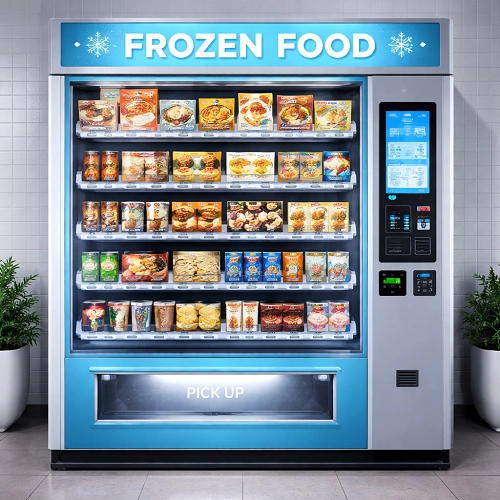
In the landscape of automated retail, frozen food vending machines represent a unique convergence of convenience, refrigeration technology, supply-chain logistics, and consumer behavior. As demand for quick, accessible meal options expands, these specialized vending systems are becoming catalysts for innovation in foodservice and unattended retail.
A frozen food vending machine is an automated retail unit designed to dispense frozen meals, ice cream, or packaged frozen products while maintaining strict temperature control throughout storage and delivery. Unlike traditional snack dispensers, these machines operate with industrial-grade refrigeration systems, sensors, and control software to ensure food safety and quality from placement to purchase.
Key Technical Components
1. Refrigeration System
The heart of any frozen food vending machine is its refrigeration system.
Critical features include:
- Compressor Unit: A hermetically sealed compressor circulates refrigerant to remove heat.
- Evaporator Coils: Installed within the storage chamber to absorb thermal energy and maintain sub-zero temperatures (often between −18°C and −22°C for food safety compliance).
- Condenser Coils: Release heat absorbed from the interior out to the environment.
- Insulation: High-density foam, vacuum panels, and double-pane doors reduce thermal loss and improve energy efficiency.
- Defrost Cycle Controls: Prevent ice build-up on coils that can compromise cooling efficiency.
These systems must be engineered to withstand high-duty cycles typical of vending environments.
2. Temperature Control and Monitoring
Maintaining consistent temperatures is essential for food safety and quality:
- Temperature Sensors (Thermistors & RTDs): Track ambient and compartment temperatures.
- PID Controllers: Manage compressor and fan speeds based on real-time temperature data.
- Remote Monitoring: IoT connectivity allows centralized dashboards to track performance, send alerts, and predict maintenance needs.
- Redundancy: Dual sensors and fail-safe triggers can shut down cooling if temperatures rise beyond safe thresholds.
This ensures compliance with food safety standards such as FDA guidelines and Hazard Analysis Critical Control Points (HACCP).
3. Product Storage and Dispensing Mechanisms
The machine’s internal architecture balances space utilization with product integrity:
- Modular Shelving: Adjustable shelving or spiral racks accommodate different package sizes.
- Robotic Arms and Conveyance Systems: Some advanced units use robotic retrieval systems for precise product handling, reducing damage.
- Gravity & Spiral Delivery: Traditional spiral coil systems release products when a purchase is made, but for frozen goods, mechanisms may include insulated delivery chutes or heated retrieval paths to prevent freezing.
4. Power and Backup Systems
Because frozen food vending requires continuous refrigeration:
- Uninterruptible Power Supplies (UPS): Maintain refrigeration control for short power outages.
- Generator Compatibility: Larger deployments may integrate with backup generators.
- Energy Usage Optimization: Variable speed drives on compressors and smart scheduling reduce peak load draw.
Efficient power management is integral to minimizing operational costs.
5. User Interface and Payment Systems
Modern vending machines integrate advanced UX and flexible payments:
- Touchscreens & Interactive Displays: Provide nutritional info, allergen warnings, and suggested pairings.
- Multiple Payment Methods: Support for credit/debit, NFC mobile payments (Apple Pay, Google Wallet), QR codes, and even loyalty program integration.
- Accessibility Features: Audio prompts, large text, and ADA-compliant design improve usability for all customers.
These interfaces often connect to back-end systems for analytics and inventory tracking.
Food Safety & Regulatory Compliance
Frozen food vending machines must adhere to high standards:
- Temperature Logging: Automated logs prove compliance for inspections.
- Sanitation Protocols: Regular cleaning schedules prevent contamination.
- Food Labeling Requirements: Ingredient lists, expiration dates, and allergen info must be visible.
- Local Health Codes: Operators often need permits and must meet local health department requirements.
Inventory Management & Supply Chain
Effective stocking and operations hinge on smart logistics:
- Real-Time Inventory Tracking: Sensors and software report stock levels and predict sell-through.
- Route Optimization: Automated scheduling for restocking routes reduces labor and fuel costs.
- Dynamic Pricing: Some systems adjust prices based on expiration dates or demand patterns.
- Cold-Chain Integrity: Products must stay frozen from manufacturer to machine, requiring insulated transport and temperature monitoring.
Connectivity & Data Analytics
IoT and cloud integration turn vending machines into data-driven assets:
- Remote Diagnostics: Identify issues before they cause downtime.
- Sales Analytics: Track trends by product, location, and time of day.
- Predictive Maintenance: Data from temperature sensors, compressors, and door switches feed machine learning models for failure prediction.
- Customer Behavior Insights: UI interactions and purchase data refine offerings and promotions.
Machine providers increasingly offer SaaS platforms for centralized management.
Security & Loss Prevention
Because vending machines are unattended:
- Tamper Detection: Sensors detect forced access or unusual vibrations.
- Cameras: Some units include surveillance to deter theft.
- Secure Payment Encryption: PCI-compliant hardware protects customer data.
- Locking Mechanisms: Reinforced locks and alarms prevent break-ins.
Deployment Considerations
When placing frozen food vending machines, operators must consider:
- Location Footfall: High-traffic areas like campuses, hospitals, airports, and workplaces.
- Power Availability: Stable electrical supply with sufficient amp capacity.
- Climate Impact: Outdoor units need weatherproofing and insulation enhancements.
- Accessibility: ADA compliance and safe access to sidewalks or corridors.
Site surveys optimize machine performance and customer reach.
Sustainability & Future Innovations
Emerging trends include:
- Energy-Efficient Refrigerants: Low-GWP (Global Warming Potential) refrigerants reduce environmental impact.
- Solar Hybrid Power: Supplemental solar panels lower electricity costs and carbon footprint.
- AI-Driven Personalization: Recommend products based on seasonal preferences or past purchases.
- Robotics & Micro-Fulfillment: Some systems may integrate limited cooking or assembly—blurring the line between vending and automated foodservice.
Sustainability certification and energy reporting may become differentiators for operators.
Challenges and Solutions
Temperature Fluctuations
- Challenge: Consistent freezing in high ambient temperatures.
- Solution: Enhanced insulation, heat-exchanger design improvements, and AI-optimized compressor cycles.
Inventory Shrinkage
- Challenge: Product damage, theft, or spoilage.
- Solution: Improved delivery mechanisms, tamper alarms, and precise inventory sensors.
Maintenance Downtime
- Challenge: Complex refrigeration breakdowns can be costly.
- Solution: Predictive maintenance software and modular replaceable parts minimize downtime.
Frozen food vending machines are sophisticated systems that demand a fusion of mechanical engineering, IoT connectivity, food safety compliance, and intelligent operations. As consumer expectations gravitate toward convenience without compromise on quality or safety, these machines are poised to redefine how frozen foods are retailed. Operators who master the technical, logistical, and business dimensions stand to benefit in an expanding market where technology meets everyday needs.