
Sheet metal fabrication is a broad manufacturing discipline that converts flat metal stock — typically ranging from 0.5 mm to 6 mm in thickness — into functional, three-dimensional parts and assemblies through a sequential set of material-removal and deformation processes. The discipline underpins virtually every tangible product category in modern industry, from consumer electronics enclosures and surgical equipment housings to power-distribution cabinets, semiconductor manufacturing tools, and smart vending machines.
Unlike casting or forging, which work with molten or semi-solid metal, sheet metal fabrication begins with solid rolled stock that preserves the original grain structure of the alloy. This means fabricated sheet components typically offer superior strength-to-weight ratios compared to cast equivalents of identical geometry — a property that is particularly valuable in applications requiring structural rigidity without mass penalty.
The global sheet metal market has grown substantially, driven by expanding demand in the energy sector, rapid semiconductor fab construction, and the proliferation of intelligent vending and retail automation equipment. Zhejiang Jiafeng's sheet metal manufacturing division serves all of these verticals from a single, fully integrated facility covering 100,000 m² in Jiashan, Zhejiang — a strategic logistics hub within the Yangtze River Delta economic zone.
The mechanical performance, corrosion resistance, machinability, and ultimate cost of any sheet metal component are determined first by material selection. Engineers must weigh tensile strength, yield point, elongation at break, thermal conductivity, and surface treatment compatibility before specifying stock.
| Material | Typical Thickness Range | Yield Strength | Key Characteristics | Common Applications |
|---|---|---|---|---|
| Cold-Rolled Steel (CRS) | 0.5 – 3.0 mm | 210 – 420 MPa | Smooth surface, tight tolerance, excellent formability | Enclosures, brackets, chassis |
| Hot-Rolled Steel (HRS) | 1.5 – 6.0 mm | 250 – 400 MPa | Lower cost, slight mill scale, good weldability | Structural frames, base plates |
| Galvanized Steel (GI / HDG) | 0.5 – 3.0 mm | 270 – 550 MPa | Zinc-coated for corrosion protection | Outdoor cabinets, HVAC panels |
| Stainless Steel 304 | 0.5 – 4.0 mm | 215 MPa (min.) | Austenitic, non-magnetic, excellent corrosion resistance | Medical equipment, food machinery |
| Stainless Steel 316L | 0.5 – 3.0 mm | 170 MPa (min.) | Molybdenum addition; superior chloride resistance | Semiconductor tools, chemical handling |
| Aluminium 5052-H32 | 0.5 – 5.0 mm | 193 MPa | Lightweight, non-sparking, marine-grade corrosion resistance | Electronics, aerospace sub-assemblies |
| Aluminium 6061-T6 | 1.0 – 6.0 mm | 276 MPa | Heat-treatable, high specific strength | Structural components, heat sinks |
| Electrolytic Tin Plate (ETP) | 0.15 – 0.49 mm | Varies by grade | Ultra-thin, corrosion-resistant, solderable | Consumer packaging, EMI shielding |
The term gauge is a legacy unit system — lower gauge numbers correspond to greater thickness. Most modern precision fabricators, including Jiafeng's precision machining division, specify material in millimetres per ISO 9445 to avoid cross-standard ambiguity. Typical sheet thickness tolerances for cold-rolled steel per EN 10131 are ±0.05 mm at 1.0 mm nominal, tightening to ±0.04 mm at 0.5 mm nominal.
The blanking stage — separating the net-shape flat profile from the raw sheet — is arguably the most consequential step in the entire workflow. Edge quality, dimensional accuracy, and material utilisation are all determined here. Modern sheet metal facilities deploy several competing technologies, each with distinct performance envelopes.
Fiber lasers have become the dominant cutting technology in precision sheet metal fabrication over the past decade, displacing CO₂ lasers for materials thinner than 20 mm. A fiber laser generates photons in a doped ytterbium glass fibre and delivers them through a flexible fibre-optic cable to a collimating and focusing head. Key advantages include:
Jiafeng's sheet metal manufacturing line is equipped with multiple high-power fiber laser cutting machines capable of processing a wide range of material types and thicknesses to tight dimensional tolerances, supporting the company's diverse customer base in the energy, semiconductor, and vending machine sectors.
Numerically Controlled Turret (NCT) punching machines use a rotating tool carousel to sequentially apply different punch-and-die pairs to the sheet. While inferior to laser in cut-edge quality, NCT punching excels at high-speed hole-making, embossing, louvering, and forming operations that require tooling action rather than thermal ablation. Typical punching force ratings range from 20 to 30 tonnes, with repositioning speeds up to 100 m/min on modern CNC platforms. The process is particularly cost-effective for high-volume runs with repetitive perforation patterns.
Plasma arc cutting remains relevant for thick carbon steel (6–50 mm) where laser systems become uneconomical. Plasma produces a rougher kerf than laser — typically 1.5–3.0 mm — but operates at low consumable cost on structural sections. Waterjet cutting, using a 4,000–6,000 bar water-abrasive jet, offers the unique advantage of no heat-affected zone (HAZ), making it suitable for thermally sensitive materials such as titanium laminates or pre-hardened tool steel — but throughput is substantially lower than either laser or plasma.
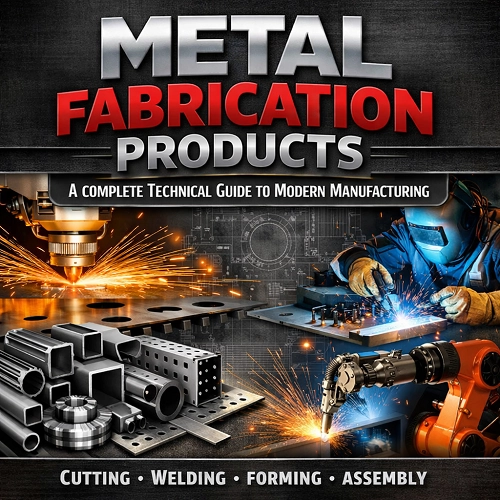
After cutting, flat sheet blanks are transformed into three-dimensional geometry through mechanical deformation. The three principal forming categories are air bending, stamping/coining, and deep drawing — each suited to different geometry types, tolerances, and production volumes.
Air bending on a CNC press brake is the most versatile forming operation in sheet metal work, capable of producing virtually any bend angle from near-zero to 180° with a single punch/die set. The metal is deformed past its yield point at the contact zone, creating a permanent bend while the unsupported span between punch tip and die shoulders spring back slightly after tool withdrawal. Modern CNC press brakes feature:
Jiafeng's automatic bending capabilities enable consistent high-volume production of complex multi-bend profiles with minimal operator intervention, which is critical for the vending machine chassis and enclosure components manufactured on-site.
When production volumes reach the tens of thousands, progressive die stamping delivers unrivalled cycle times — often 20–120 strokes per minute — by combining multiple operations (punching, blanking, bending, coining) in a single compound die mounted in a mechanical or hydraulic press. Each press stroke advances the strip feed by one pitch, simultaneously performing the operation at every die station. Part-to-part consistency is extremely high since geometry is defined entirely by hard tooling, eliminating the CNC path variability associated with laser cutting or press-brake bending.
Deep drawing uses a punch to force a flat blank through a die orifice, forming a seamless hollow shape such as a cup, cone, or box. The process is governed by the limiting draw ratio (LDR) — the maximum ratio of blank diameter to punch diameter achievable in a single draw pass — which for low-carbon steel typically falls between 2.0 and 2.4. Hydroforming, a variant where a pressurised fluid replaces the solid punch, allows more complex geometries and reduces surface contact marks, making it popular in premium enclosure fabrication.
Joining sheet metal sub-assemblies demands methods that provide structural integrity, dimensional stability, and — where required — leak-tightness or aesthetic finish. The choice of process depends on material type, joint configuration, production rate requirements, and post-weld surface finish expectations.
Beyond welding, mechanical joining via self-clinching fasteners (PEM nuts, studs, and standoffs pressed or punched into the sheet) is widely used in electronics enclosures because it provides strong, vibration-resistant threaded connections without any thermal process. Jiafeng's electromechanical assembly team routinely integrates self-clinching hardware into sub-assemblies prior to final coating, enabling faster downstream module installation.
Surface treatment is not merely cosmetic — it is a functional necessity that protects substrate metal from corrosion, wear, and chemical attack while satisfying aesthetic specifications. The correct treatment sequence must be designed into the process plan from the start because some operations (e.g., electroplating before welding) are incompatible.
Powder coating uses finely ground thermosetting polymer particles electrostatically charged and sprayed onto a grounded metal substrate. The part is then conveyed through a curing oven at 180–200°C, where the powder flows and cross-links into a continuous, chemically resistant film. Film thickness typically runs 60–120 µm. Compared to liquid paint, powder coating is solvent-free, produces virtually no VOC emissions, and offers superior impact resistance and edge coverage. RAL/Pantone colour matching is standard; texture variants from mirror-gloss to heavy-hammertone are achievable by varying resin formulation and cure profiles.
Electroplating deposits a metallic layer from an ionic bath onto the substrate via direct current. Zinc electroplating (electrogalvanising) provides sacrificial corrosion protection and is a mandatory finish for many outdoor electrical enclosures. Nickel plating adds a hard, lustrous surface suited to connector components with demanding wear requirements. Decorative chrome plating, applied as a thin (0.3–0.5 µm) hexavalent or trivalent chrome layer over a nickel undercoat, delivers the bright reflective finish familiar in premium hardware.
Anodising converts the aluminium surface into a porous aluminium oxide layer by immersing the part in a dilute sulfuric acid electrolyte and applying a controlled anodic current. The resulting oxide layer — 5–25 µm for standard anodising, up to 50 µm for hard anodising — is integral to the substrate, cannot peel, and can be sealed with dyestuffs to produce vivid colours. Hard anodising is mandatory in demanding applications such as semiconductor tooling and firearm components where surface hardness exceeding 400 HV is specified.
Quality in sheet metal fabrication is managed at four levels: incoming material inspection, in-process dimensional verification, post-process functional testing, and final acceptance inspection. Each level uses different instruments and rejection criteria defined by the drawing standard (ISO 2768, ASME Y14.5, or customer-specific GD&T callouts).
Coordinate Measuring Machines (CMMs) provide three-dimensional dimensional verification against CAD models to sub-micron uncertainty, and are essential for complex assemblies where multiple fabricated parts must interface within tight stack tolerances. Optical comparators, height gauges, digital callipers, and thread gauges cover routine in-process checks. For surface finish, contact profilometers (stylus instruments per ISO 4287) measure Ra and Rz parameters, while non-contact confocal sensors are used on delicate or curved surfaces where stylus contact would cause damage.
Visual weld inspection per ISO 5817 defines three quality levels (B, C, D) governing allowable imperfections including undercut depth, porosity diameter, and incomplete penetration. For structural applications, ultrasonic testing (UT) or radiographic testing (RT) may be required to verify sub-surface weld integrity. Dye penetrant inspection (DPI) is a low-cost method for detecting surface-breaking cracks in ferrous and non-ferrous welds.
Selecting a sheet metal fabrication partner involves evaluating technical capability, process breadth, quality systems, delivery reliability, and the depth of engineering support available. Jiafeng Expert (jiafeng-expert.com) differentiates itself through vertical integration of the complete fabrication and assembly chain within a single facility — reducing inter-supplier handoffs, shortening lead times, and providing a single point of accountability for quality.
The company's corporate culture is anchored in four values — Integrity, Dedication, Pragmatism, and Innovation — that shape its approach to customer relationships, product quality, and continuous process improvement. With over two decades of accumulated manufacturing expertise since its formal establishment in October 2003, Jiafeng has developed long-term, stable partnerships with world-renowned enterprises and consistently delivers high-performance products and professional, responsive service.
For engineers, procurement managers, and product development teams seeking a reliable sheet metal fabrication partner capable of scaling from prototypes to mass production, Jiafeng Expert offers a compelling combination of technical depth, infrastructure scale, and integrated manufacturing capability. Contact Jiafeng's team to discuss your project requirements and receive a detailed quotation.



