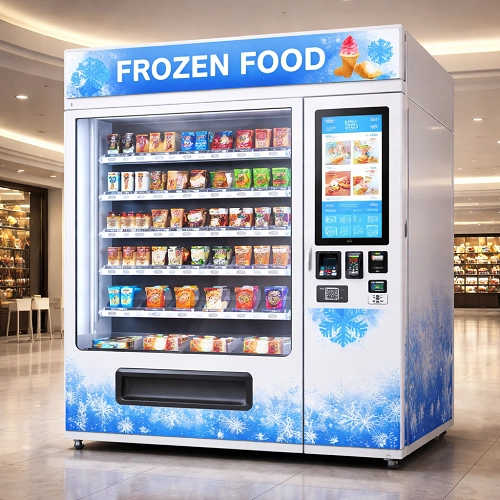
A Frozen Food Vending Machine is an intelligent self-service retail device designed to store, display, and automatically dispense frozen products such as ice cream, frozen meals, desserts, and packaged foods. These machines combine advanced refrigeration systems, digital payment technology, and smart inventory management to provide convenient 24/7 automated retail solutions in high-traffic locations.
Modern frozen food vending machines can maintain stable freezing temperatures (around -18 °C / 0 °F) to ensure product freshness and safety while offering features such as touchscreen interfaces, multiple payment methods, and remote monitoring for operators.
Frozen food vending machines are designed to automatically store and sell frozen products while maintaining consistent low temperatures to preserve food quality. These machines allow consumers to conveniently purchase frozen items anytime without requiring human staff.
The primary function of the machine is to store frozen products and dispense them automatically after payment. It can sell a wide variety of frozen goods including:
The machine ensures proper product preservation by maintaining freezing temperatures, usually around -18 °C, which prevents spoilage and preserves taste and texture.
Frozen food vending machines enable round-the-clock retail operations without the need for store staff. Customers can purchase food anytime using cash, cards, or mobile payment systems.
Many machines include remote monitoring systems that allow operators to:
These features help improve operational efficiency and reduce restocking costs.
Modern machines integrate advanced technologies such as:
These innovations improve the user experience and make purchasing quick and convenient.
Frozen food vending machines are equipped with multiple advanced features that ensure efficient operation, safe food storage, and easy user interaction.
The machine uses a high-performance refrigeration compressor and insulated cabinet to maintain a stable temperature environment. Multi-zone or uniform cooling systems help ensure all products remain frozen evenly throughout the machine.
Flexible tray or coil systems allow the machine to accommodate different product sizes and packaging formats. Adjustable shelves can store items ranging from ice cream bars to boxed frozen meals.
Modern vending machines include technologies such as:
These systems ensure safe and reliable product delivery.
Frozen food vending machines support a variety of payment methods including:
This flexibility makes transactions convenient for customers.
Operators can manage the machine remotely through cloud platforms or mobile apps, enabling:
The machines are built with strong materials and security features such as:
These features ensure safe operation in public locations.
The specifications of frozen food vending machines may vary by model. A typical configuration includes the following parameters:
| Parameter | Specification |
| Machine Type | Frozen Food Vending Machine |
| Dimensions | Approx. 1960 × 1375 × 875 mm |
| Weight | Around 470 kg |
| Capacity | 270–500 items |
| Product Selections | Up to 45–54 selections |
| Temperature Range | -18 °C to -25 °C |
| Power Supply | AC 110–240V / 50–60Hz |
| Touchscreen | 21.5–49 inch HD display |
| Payment System | Cash, card, mobile payment |
| Communication Interface | MDB / DEX / RS232 |
| Cooling System | High-efficiency compressor |
| Lighting | LED internal lighting |
Specifications can vary depending on machine size, configuration, and customization options.
Regular maintenance ensures smooth operation:
Frozen food vending machines are widely used across various industries due to their ability to provide convenient, automated food sales.
Convenience stores and food retailers use vending machines to extend sales hours and provide quick access to frozen products.
Hotels and resorts install vending machines to offer snacks and frozen meals for guests at any time.
Schools and universities use these machines to provide frozen snacks, ice cream, and quick meals for students.
Hospitals and clinics install vending machines to supply food for visitors, patients, and staff working late shifts.
Airports, subway stations, and train stations often use vending machines to provide quick food options for travelers.
Factories and office buildings use vending machines in employee break rooms to provide convenient meal options.
Frozen food vending machines are suitable for a wide range of customer groups who require automated retail solutions.
Entrepreneurs and vending companies can use these machines to expand their automated retail businesses.
Retailers can install vending machines outside their stores to increase sales and operate beyond normal business hours.
Frozen food brands can use vending machines as an innovative channel to distribute and promote their products.
Shopping malls, residential complexes, and office buildings can install vending machines to improve service convenience.
Schools, hospitals, transportation hubs, and sports venues often install vending machines to provide quick meal options for visitors.
Frozen food vending machines represent a modern retail solution that combines advanced refrigeration technology, automated sales systems, and smart management tools. They provide a convenient, efficient, and scalable method for selling frozen foods in various locations.
With increasing demand for self-service retail and 24-hour food access, frozen food vending machines are becoming an important part of the automated food retail industry.